A growing (young) community born to preserve the mountains communities and productions
Wednesday, March 18, 2020
An emotional encounter in Sàgona, one of our favourite local "osteria"
A dinner of chestnuts: the fruits of the Pratomagno, Viviano's recipes, his stories:
"Sàgona is here, Sàgona is a place. You can stop to eat, to drink, to watch, to talk, to hang out, to get to know each other."
Osteria di Sàgona is one of our favourite places. If you happen to be with us in one of our homes, this place could be part of your local experience with us! Good food and wine are the quintessence of Tuscany, so come onto a food and wine tour with us and you will discover Osteria di Sàgona in person. This place has a real call for sustainability and support of the local products, and so we do!
A magical place at the feet of the mountain of Pratomagno, few kms from Loro Ciuffenna in Valdarno. The farm produces wine and olive oil, but it also has a garden and "neighbors" that provide the best quality products, km 0!
Lunch, dinners won't be a need anymore, they will become a deep experience and connection to this mountain of Pratomagno.
Sàgona often welcomes "friends and neighbors" for a social meeting with people, food and good wine: last February 21st we have attended a dinner and the guest was Viviano, we'd like you to meet him and his story.
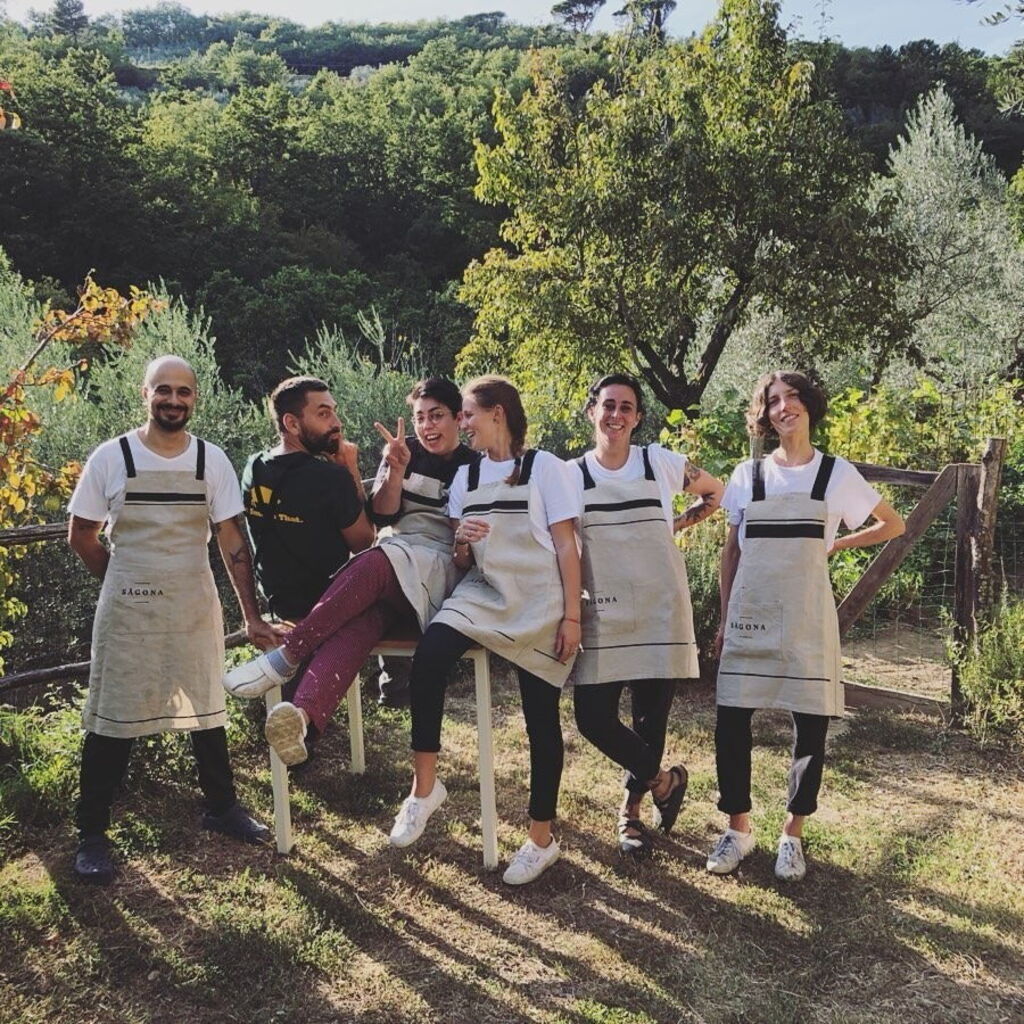
(in the picture, Osteria di Sàgona's young staff)
"Sàgona is here, Sàgona is a place. You can stop to eat, to drink, to watch, to talk, to hang out, to get to know each other."
Osteria di Sàgona is one of our favourite places. If you happen to be with us in one of our homes, this place could be part of your local experience with us! Good food and wine are the quintessence of Tuscany, so come onto a food and wine tour with us and you will discover Osteria di Sàgona in person. This place has a real call for sustainability and support of the local products, and so we do!
A magical place at the feet of the mountain of Pratomagno, few kms from Loro Ciuffenna in Valdarno. The farm produces wine and olive oil, but it also has a garden and "neighbors" that provide the best quality products, km 0!
Lunch, dinners won't be a need anymore, they will become a deep experience and connection to this mountain of Pratomagno.
Sàgona often welcomes "friends and neighbors" for a social meeting with people, food and good wine: last February 21st we have attended a dinner and the guest was Viviano, we'd like you to meet him and his story.
(in the picture, Osteria di Sàgona's young staff)
Viviano & the Chestnut Culture in Pratomagno
Viviano was born in Gorgiti in October, 1958. Until he was 17 yo he lived in Rocca Ricciarda, a village located in an altitude of 1000 mt (3200ft) on the slopes of Pratomagno. The first of four children, from the time he was very young he accompanied his parents to look for mushrooms, gather chestnuts, and sow those few small pieces of land that the mountain conceded. The house had no running water, and the first road arrived up there only in 1969. Whit his sister, he walked 10 km every day through the woods (in the snow in winter) to go to elementary school.
Despite the inconveniences and difficulties of living on this mountain, he loved it. e loves it so much that his experience and profound scientific- naturalistic knowledge have made him be considered one of the greatest experts in the territory.
In his speech, with serene simplicity and by mean of several recipes, he tries to transmit to his public the great value of these places and the history and ancient knowledge- that become culture- of its inhabitants.
He recounts the sensations that these bring to his mind, the flavors that resurface in his memories, from a past that is too important to be forgotten.
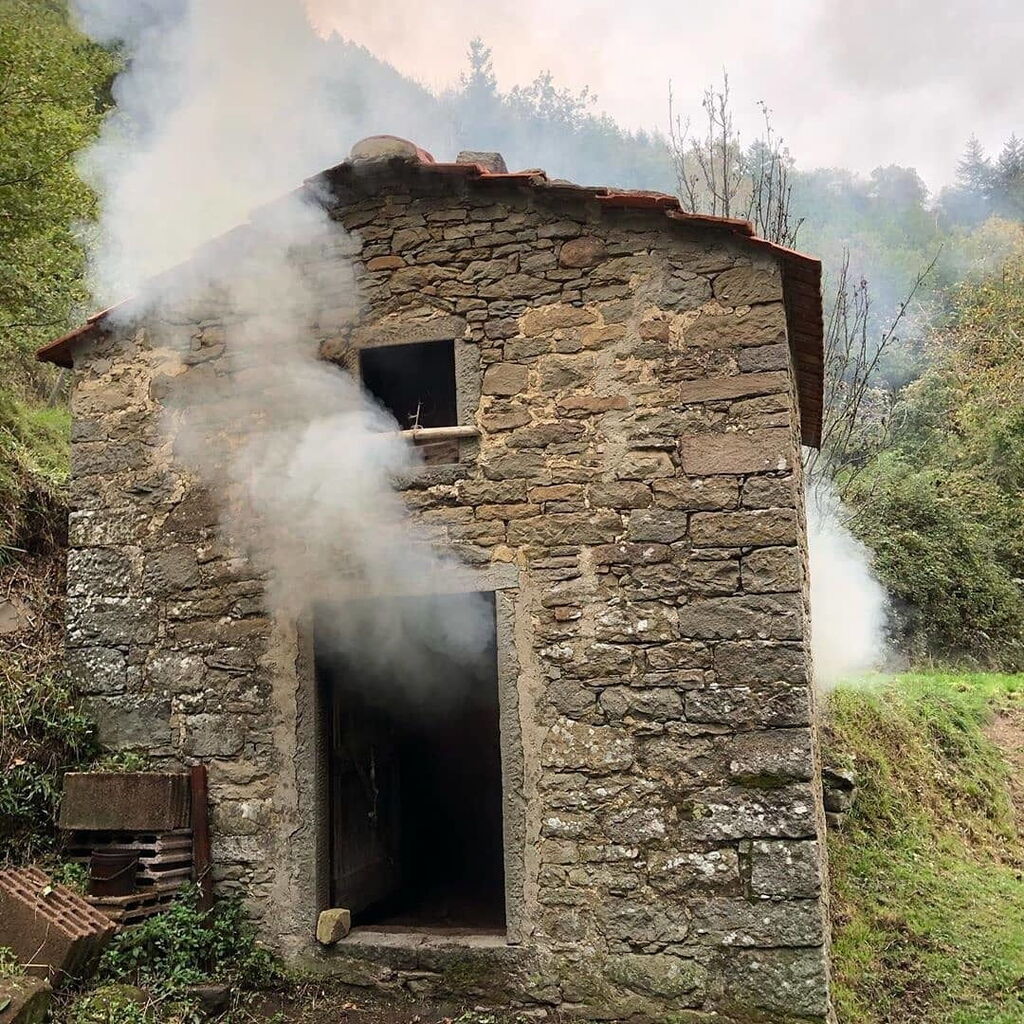
From October the picking of chestnut would last until Christmas. Every day they would add a new layer of chestnut. The first flour would start to be ready in early December. Chestnut where picked and put to dry in special "seccatoi": "houses" made of two rooms on two levels. On te ground floor they make fire made of chestnut wood (best taste), a special ceiling made of small wood strips to hold chestnuts that would dry above. Fire during 25 days was ongoing. When chestnut are dry (precooked) and pealed they can be toasted in the oven, to make flour.
The pealing and "Battitura" (beating) was a very important part of the process. They would put them into a strong sack and beat them on a stamp, there could be even 5 people beating at the same time on the same stamp!
The skins were removed thanks to the womens' work mainly: they would have a large dishe, each woman would through several chestnuts up in the air. The chestnuts due to their weight would fall on the dish first, to allow the woman to remove the dish to let the skins fall on the ground. This would last all night long.
Each family would have its own "seccatoio" and the oven to dry the chestnuts, if they were lucky to have some normal flour they could also make some bread. The drying rooms were proper places of encounters, like a lounge room, where people meet to stay warm and tell stories, the storytelling went on to become the culture and life of the people.
In the 30's machine, the first machines were made with a wooden beater moving thanks to a metal pulley. Viviano told us how someone he knows made (and still has it at present!) one thanks to an engine found on a fallen English airplane!!!
Polenta is made with boiling water in a "paiolo"- pot, flour is added and mixed in until water is absorbed completely. This was a very popular dish. Chestnut flour is slightly sweet but was often accompanied by salty food. Many of the products available in the mountains were: canned herring, brawn, cheese. Others were produced but not so common for private use, but for selling: lard, brawn, dried bacon. Lately used with sweet ingredients or made in baking with ricotta cheese and chocolate. Examples are: Frittelle di Castagne e Castagnaccio.
While beans were not so common, proteins were mainly in Chickpeas. Very important product eaten in soup with chestnut.
(in the pciture, an old "seccatoio")
Despite the inconveniences and difficulties of living on this mountain, he loved it. e loves it so much that his experience and profound scientific- naturalistic knowledge have made him be considered one of the greatest experts in the territory.
In his speech, with serene simplicity and by mean of several recipes, he tries to transmit to his public the great value of these places and the history and ancient knowledge- that become culture- of its inhabitants.
He recounts the sensations that these bring to his mind, the flavors that resurface in his memories, from a past that is too important to be forgotten.
From October the picking of chestnut would last until Christmas. Every day they would add a new layer of chestnut. The first flour would start to be ready in early December. Chestnut where picked and put to dry in special "seccatoi": "houses" made of two rooms on two levels. On te ground floor they make fire made of chestnut wood (best taste), a special ceiling made of small wood strips to hold chestnuts that would dry above. Fire during 25 days was ongoing. When chestnut are dry (precooked) and pealed they can be toasted in the oven, to make flour.
The pealing and "Battitura" (beating) was a very important part of the process. They would put them into a strong sack and beat them on a stamp, there could be even 5 people beating at the same time on the same stamp!
The skins were removed thanks to the womens' work mainly: they would have a large dishe, each woman would through several chestnuts up in the air. The chestnuts due to their weight would fall on the dish first, to allow the woman to remove the dish to let the skins fall on the ground. This would last all night long.
Each family would have its own "seccatoio" and the oven to dry the chestnuts, if they were lucky to have some normal flour they could also make some bread. The drying rooms were proper places of encounters, like a lounge room, where people meet to stay warm and tell stories, the storytelling went on to become the culture and life of the people.
In the 30's machine, the first machines were made with a wooden beater moving thanks to a metal pulley. Viviano told us how someone he knows made (and still has it at present!) one thanks to an engine found on a fallen English airplane!!!
Polenta is made with boiling water in a "paiolo"- pot, flour is added and mixed in until water is absorbed completely. This was a very popular dish. Chestnut flour is slightly sweet but was often accompanied by salty food. Many of the products available in the mountains were: canned herring, brawn, cheese. Others were produced but not so common for private use, but for selling: lard, brawn, dried bacon. Lately used with sweet ingredients or made in baking with ricotta cheese and chocolate. Examples are: Frittelle di Castagne e Castagnaccio.
While beans were not so common, proteins were mainly in Chickpeas. Very important product eaten in soup with chestnut.
(in the pciture, an old "seccatoio")
Osteria di Sàgona introduces Viviano like this:
We are fun number one of this place, and I believe they know very well how to tell stories and make people tell stories. I am personally still moved by their tales and engagement with people, their guests:
"Viviano knows Pratomagno like few others, but above all he loves it. And he loves the land, and agriculture. Viviano was born there, on Pratomagno, in 1958; he has it inside, he takes it with him. And he talks about it: memories, anecdotes, problems, future horizons.
Stories. Yes, everytime I see him I feel like saying "Viviano tell me a story", because his words transform the physical space of Pratomagno into a mythical place inhabited by shepherds and charcoal burners, housewives and millers, where at school people used to walk for hours, where the winters were cold and covered with snow, where all the chimneys of the mountain were lit. Where chestnut trees were pruned, where there were more sheep than ungulates.
Where chestnut flour was not a typical product but a primary subsistence good.
Here, Viviano starting from chestnuts will tell us stories, of yesterday and today. But also of tomorrow.
Because it's good to listen to stories, it's good for the soul.
"What unites people? Armies... gold... flags? Stories. There's nothing more powerful than a good story. Nothing can stop it. No enemy can defeat it."
The word history comes from the Greek word ἱστορία, which means research, moreover it has the same root ιδ- as the verb ὁράω which means to see, and in a broad sense, to know, to know.
And we, through the stories of Viviano, will learn about Pratomagno."
Thank you for your attention. If you're reading this maybe we've made you dream and travel through the woods of Pratomagno looking for chestnut: thanks to Viviano, we can take you to discover these places, taste these products and live an unforgettable time with us!
Share this article and let us know if you wish to have more info about us and our service!
Osteria di Sàgona is on Facebook and Instagram:
https://www.facebook.com/sagonaosteria
https://www.instagram.com/_sagona_/
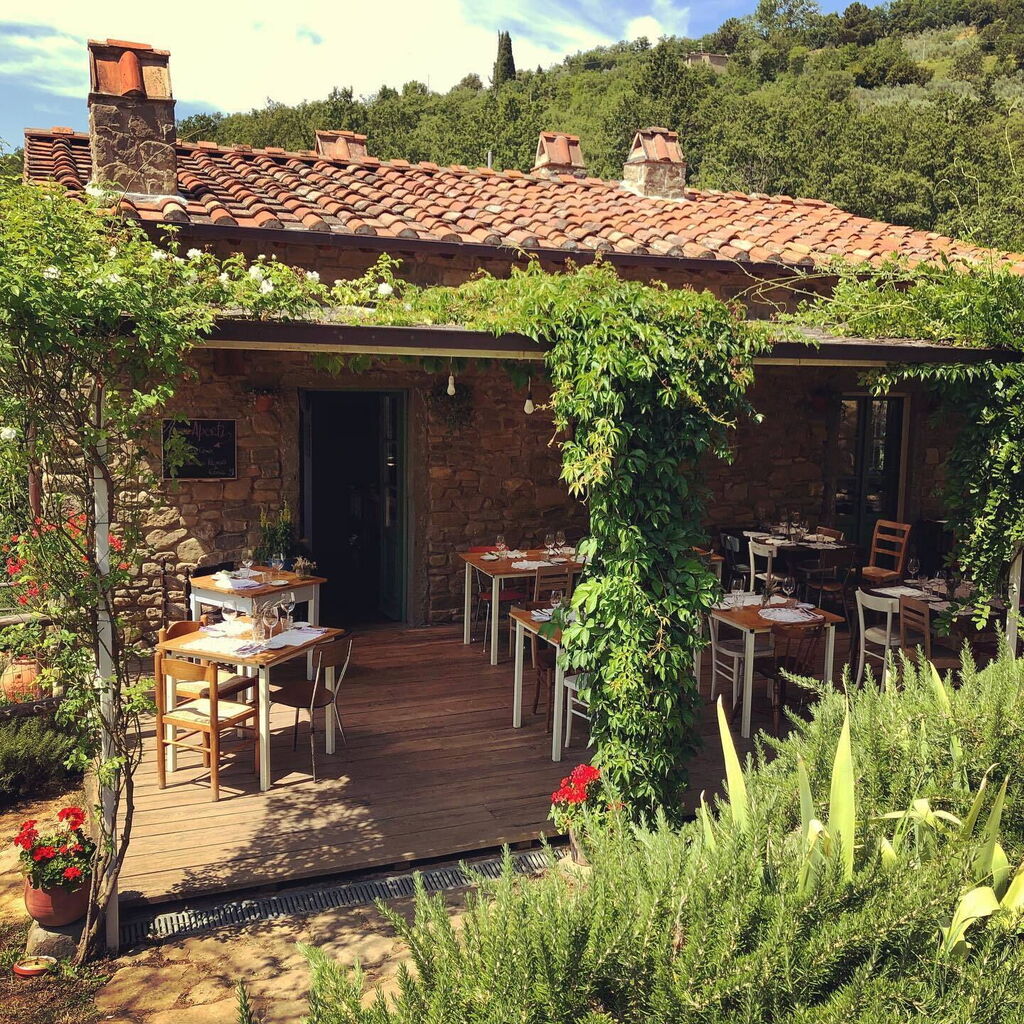
(in the picture the patio of Osteria di Sàgona in spring)
"Viviano knows Pratomagno like few others, but above all he loves it. And he loves the land, and agriculture. Viviano was born there, on Pratomagno, in 1958; he has it inside, he takes it with him. And he talks about it: memories, anecdotes, problems, future horizons.
Stories. Yes, everytime I see him I feel like saying "Viviano tell me a story", because his words transform the physical space of Pratomagno into a mythical place inhabited by shepherds and charcoal burners, housewives and millers, where at school people used to walk for hours, where the winters were cold and covered with snow, where all the chimneys of the mountain were lit. Where chestnut trees were pruned, where there were more sheep than ungulates.
Where chestnut flour was not a typical product but a primary subsistence good.
Here, Viviano starting from chestnuts will tell us stories, of yesterday and today. But also of tomorrow.
Because it's good to listen to stories, it's good for the soul.
"What unites people? Armies... gold... flags? Stories. There's nothing more powerful than a good story. Nothing can stop it. No enemy can defeat it."
The word history comes from the Greek word ἱστορία, which means research, moreover it has the same root ιδ- as the verb ὁράω which means to see, and in a broad sense, to know, to know.
And we, through the stories of Viviano, will learn about Pratomagno."
Thank you for your attention. If you're reading this maybe we've made you dream and travel through the woods of Pratomagno looking for chestnut: thanks to Viviano, we can take you to discover these places, taste these products and live an unforgettable time with us!
Share this article and let us know if you wish to have more info about us and our service!
Osteria di Sàgona is on Facebook and Instagram:
https://www.facebook.com/sagonaosteria
https://www.instagram.com/_sagona_/
(in the picture the patio of Osteria di Sàgona in spring)